The shipping industry has transformed rapidly over the last decade. Modern ships are no longer operated only by traditional navigation methods and manual calculations. Today’s vessels depend heavily on advanced digital navigation systems, automation, and real-time operational monitoring. One of the most important technologies leading this transformation is the Electronic Chart Display and Information System (ECDIS). Along with this, simulator-based maritime training has become essential for every seafarer who wants to build a successful and future-ready career in the merchant navy.
As ships become smarter and international maritime regulations become stricter, shipping companies now prefer officers and crew who are professionally trained in ECDIS operations and simulator handling. This is why ECDIS and simulator training are among the most valuable post-sea courses for merchant navy professionals today.
Whether you are a deck officer planning promotion exams, a navigating officer aiming for better placements, or a seafarer looking for career growth in the maritime industry, understanding the importance of ECDIS and simulator training can give you a major professional advantage.
What is ECDIS in the Merchant Navy?
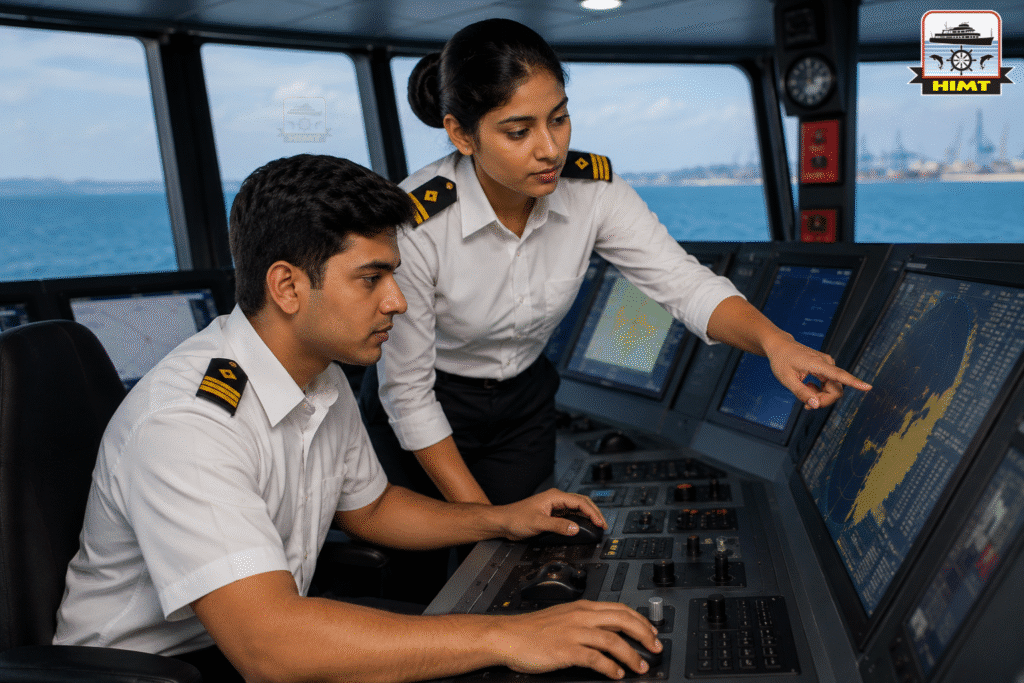
ECDIS stands for Electronic Chart Display and Information System. It is an advanced digital navigation system used onboard ships to replace traditional paper charts. ECDIS integrates electronic navigational charts, GPS positioning, radar data, route planning, voyage monitoring, and safety alarms into a single system.
Modern ships rely on ECDIS because it improves navigational accuracy, reduces human error, and enhances voyage safety. International maritime regulations under IMO and SOLAS have already made ECDIS mandatory for most commercial vessels.
In today’s shipping environment, a navigating officer without proper ECDIS knowledge may struggle to secure opportunities on advanced vessels. Shipping companies prefer officers who can confidently operate digital bridge systems and respond effectively during critical navigation situations.
Why ECDIS Training is Important for Modern Ships
The role of ECDIS is no longer limited to route display. It has become a complete navigation support system that directly impacts ship safety, fuel efficiency, voyage planning, and compliance with maritime regulations.
Here are the major reasons why ECDIS training is highly important in modern shipping careers:
Improves Navigational Safety
One of the biggest advantages of ECDIS is enhanced navigational safety. The system provides real-time vessel positioning, anti-grounding alarms, route monitoring, and navigational warnings. Officers trained in ECDIS can detect hazards earlier and take preventive actions quickly.
Proper ECDIS training helps officers understand:
- Route planning procedures
- Safety contour settings
- Alarm management
- Position monitoring
- Collision avoidance support
- Chart correction handling
- Navigational risk assessment
A well-trained officer can significantly reduce navigational mistakes that may lead to accidents or regulatory violations.
Mandatory Requirement for Many Ships
Today, many international shipping companies require certified ECDIS training before joining vessels equipped with electronic navigation systems. In many cases, officers without approved ECDIS certification may not be eligible for deployment.
This makes ECDIS certification one of the most valuable post-sea courses for:
- Deck cadets
- Third officers
- Second officers
- Chief officers
- Masters
Having a valid ECDIS certification improves employability and increases opportunities with reputed shipping companies operating modern fleets.
Supports Faster Career Growth
The maritime industry values officers who can adapt to modern ship technology. Candidates with strong ECDIS knowledge often gain an advantage during interviews, promotions, and foreign vessel placements.
ECDIS training supports career growth by helping officers:
- Build confidence in modern bridges
- Handle integrated navigation systems
- Improve operational efficiency
- Meet international competency standards
- Increase chances of promotion
For officers preparing for higher responsibilities onboard, ECDIS competency is no longer optional. It has become a professional necessity.
Reduces Human Error in Navigation
Human error remains one of the leading causes of maritime accidents worldwide. Incorrect plotting, poor situational awareness, and navigation mistakes can result in severe consequences.
ECDIS helps minimize such risks by providing:
- Automated position updates
- Safety alarms
- Integrated navigational data
- Accurate voyage planning support
- Continuous monitoring systems
However, the effectiveness of ECDIS depends entirely on the officer operating it. This is why structured ECDIS simulator training is extremely important.
What is Simulator Training in the Merchant Navy?
Simulator training refers to practical maritime training conducted using advanced simulation systems that replicate real shipboard environments. These simulators create realistic scenarios that help officers and crew practice operations without actual onboard risk.
Modern maritime institutes use advanced bridge simulators, engine room simulators, cargo handling simulators, and emergency response simulators to train seafarers effectively.
Simulator training is now considered one of the most important parts of maritime education and post-sea competency development.
Importance of Simulator Training for Seafarers
Practical exposure is critical in the shipping industry. Simulator training bridges the gap between classroom learning and real onboard operations.
Provides Realistic Shipboard Experience
Simulator training exposes candidates to realistic navigation and operational situations, such as:
- Restricted visibility navigation
- Heavy traffic management
- Port approach operations
- Emergency maneuvering
- Equipment failures
- Collision avoidance scenarios
- Adverse weather conditions
This practical exposure builds confidence and prepares officers to respond effectively during actual sea operations.
Enhances Decision-Making Skills
Modern ships operate in dynamic and challenging environments. Officers are expected to make quick and accurate decisions under pressure.
Simulator training improves:
- Situational awareness
- Leadership abilities
- Bridge resource management
- Team coordination
- Crisis management
- Stress handling capabilities
These skills are highly valued by shipping companies and directly contribute to safer vessel operations.
Builds Confidence Before Joining Ships
Many junior officers and cadets experience nervousness before handling real bridge equipment or emergencies onboard. Simulator training allows them to practice repeatedly in a controlled environment.
This helps candidates:
- Gain practical confidence
- Understand bridge procedures
- Familiarize themselves with the equipment
- Improve communication onboard
- Develop professional discipline
The more realistic the training environment, the smoother the transition to real ship operations.
Essential for Promotion and Competency
Simulator-based courses are commonly required during competency upgrades and post-sea certification programs.
Many maritime authorities and shipping companies expect officers to complete simulator-based training for:
- Bridge Resource Management
- ECDIS
- Radar and ARPA
- Advanced navigation
- Crisis management
- Ship handling
Completing these courses strengthens professional profiles and supports long-term career progression.
Difference Between Traditional Training and Simulator-Based Training
Traditional maritime learning mainly focused on theoretical concepts and onboard observation. However, modern shipping operations demand practical skill assessment.
Simulator training offers major advantages because it allows candidates to:
- Learn through real-time scenarios
- Practice repeatedly without risk
- Understand emergency procedures better
- Improve technical handling skills
- Experience complex navigation conditions safely
This practical approach improves competency levels significantly compared to theory-only learning.
Best Post-Sea Courses Related to ECDIS and Simulator Training
For merchant navy professionals planning career advancement, several post-sea courses focus directly on navigation technology and simulator competency.
Generic ECDIS Course
This is one of the most important mandatory courses for deck officers serving onboard ECDIS-fitted vessels. The course covers:
- ECDIS operation principles
- Route planning
- Alarm management
- Safety settings
- Chart correction procedures
- Voyage monitoring
It is essential for officers aiming to work on modern merchant ships.
Bridge Resource Management (BRM)
BRM training focuses on bridge teamwork, communication, leadership, and decision-making during navigation operations.
This course improves:
- Team coordination
- Situational awareness
- Emergency response
- Leadership efficiency
Shipping companies highly prefer officers trained in BRM concepts.
Radar and ARPA Simulator Course
This course trains officers in radar plotting, collision avoidance, and ARPA system handling using practical simulator sessions.
It remains an important certification for navigation officers working onboard commercial vessels.
Advanced Ship Handling Simulator Courses
These courses help senior officers practice advanced maneuvers such as:
- Berthing and unberthing
- Emergency steering
- Heavy weather handling
- Tug operations
- Restricted water navigation
Such courses are highly useful for Masters and Chief Officers.
Career Opportunities After ECDIS and Simulator Training
Completing ECDIS and simulator-based post-sea courses can create strong career opportunities in the maritime industry.
Professionals with these certifications often receive better opportunities in:
- International shipping companies
- Offshore vessels
- Cruise ships
- LNG and tanker fleets
- Maritime training institutes
- Port operations
- Marine consultancy services
These certifications also strengthen profiles for shore-based maritime careers later in life.
Why Shipping Companies Prefer Technically Skilled Officers
Modern ships are technologically advanced and highly automated. Shipping companies now prioritize officers who can operate integrated systems efficiently while maintaining safety standards.
Officers with simulator and ECDIS expertise are often seen as:
- Better decision-makers
- Safer navigators
- More adaptable professionals
- Technically stronger candidates
- Promotion-ready officers
As maritime technology continues evolving, technical competency will become even more important in future recruitment and promotion processes.
How to Choose the Right Maritime Training Institute for ECDIS and Simulator Courses
The quality of maritime training plays a major role in shaping a successful merchant navy career. Since ECDIS and simulator-based learning are highly practical courses, candidates should always choose a DG Shipping and UK MCA approved maritime institute with modern infrastructure, experienced faculty, and strong industry exposure.
Before enrolling in any post-sea course, candidates should carefully evaluate factors such as:
- DG Shipping approved certification
- Advanced bridge and simulator facilities
- Experienced maritime trainers
- Practical learning environment
- Updated course curriculum as per industry standards
- Reputation in the maritime industry
HIMT provides specialized post-sea training programs designed to meet modern shipping industry requirements. With advanced simulator facilities, industry-oriented training methods, and experienced maritime professionals, candidates can gain the practical exposure needed to confidently operate modern shipboard systems.
Choosing the right maritime institute not only improves technical knowledge but also enhances employability, onboard confidence, and long-term career growth in the global merchant navy industry.
Conclusion
The future of the merchant navy industry is deeply connected with digital navigation systems, automation, and advanced operational technologies. ECDIS and simulator training are no longer additional qualifications — they have become essential professional competencies for modern seafarers.
From improving navigational safety and reducing human error to supporting promotions and increasing employability, these post-sea courses play a major role in shaping successful maritime careers. Officers trained in ECDIS and simulator operations are better prepared to handle real-world shipboard challenges with confidence, accuracy, and professionalism.
As shipping companies continue adopting smarter vessels and stricter international safety standards, the demand for technically skilled officers will only grow stronger. Investing in ECDIS and simulator training is therefore not just about certification; it is about securing long-term career growth, better opportunities, stronger onboard performance, and future readiness in the global maritime industry.
For every merchant navy professional aiming to stay competitive in today’s evolving shipping sector, ECDIS and simulator training remain among the most valuable and career-enhancing post-sea courses available.
FAQs
1. Is ECDIS training mandatory for merchant navy officers?
Yes, ECDIS training is mandatory for deck officers serving on ships fitted with ECDIS systems as per IMO and STCW regulations. Most international shipping companies also require valid ECDIS certification before joining modern vessels.
2. What is the benefit of simulator training in the merchant navy?
Simulator training helps seafarers gain practical experience in a safe and controlled environment. It improves navigation skills, emergency handling, decision-making, and confidence before working onboard real ships.
3. Which post-sea course is best for navigation officers after sea service?
Courses like Generic ECDIS, Bridge Resource Management (BRM), Radar & ARPA, and Advanced Ship Handling are highly recommended for navigation officers. These courses improve technical competency and support career growth in the merchant navy.
4. Does ECDIS certification help in getting better shipping company placements?
Yes, officers with ECDIS and simulator certifications are often preferred by reputed shipping companies operating modern fleets. These certifications increase employability, promotion opportunities, and chances of joining advanced vessels.
5. How long does an ECDIS and simulator training course usually take?
Most Generic ECDIS courses are conducted over a few days, depending on the institute and DG Shipping guidelines. Simulator-based maritime courses may vary in duration based on the level of training and certification requirements.