Introduction: Start Smart, Sail Strong
Every successful seafarer you see today started with one common foundation—STCW certification. If you’re planning to join the Merchant Navy, these courses are not just formalities; they are your entry ticket to the shipping industry.
Many beginners rush into enrolling without understanding what each course actually does for their career. The smarter approach is to understand which STCW courses matter, when to take them, and how they align with your job goals. That’s exactly what this guide will help you do.
Understanding STCW in the Real World
STCW stands for Standards of Training, Certification, and Watchkeeping for Seafarers, a global framework that defines the minimum training and competency standards required for anyone working at sea. It is governed by the International Maritime Organization (IMO), ensuring that every seafarer is properly trained, every ship operates with a competent crew, and overall maritime accidents are significantly reduced.
In simple terms, STCW is what brings structure and safety to the shipping industry. The STCW Convention ensures that anyone stepping onboard a vessel is not just qualified on paper, but practically prepared to handle real-time situations at sea. In India, this entire process is regulated by DG Shipping, and all STCW courses must be completed only through approved maritime institutes to be considered valid.
Who Should Take These Entry-Level STCW Courses?
These courses are designed for:
- Freshers joining the Merchant Navy
- Deck cadets / Engine cadets
- Ratings (GP Rating, Trainee OS, Wiper)
If you’re entering the industry, these are your non-negotiable qualifications.
1. Basic STCW Safety Training (BST)
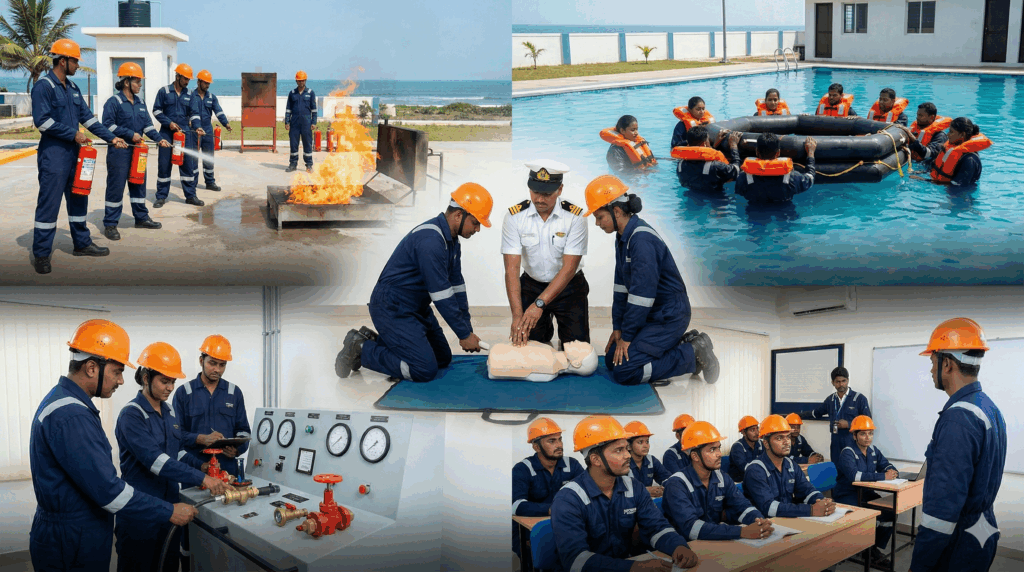
This is where everything begins. The Basic Safety Training for seafarers is the most essential certification, forming the backbone of maritime training. It prepares you for the realities of life at sea, where safety is not theory—it’s survival.
You’ll be trained to handle emergencies confidently, from abandoning ship to dealing with onboard fires. Most importantly, BST develops the mindset required to stay calm and act fast under pressure.
Key components include:
- Personal Survival Techniques (PST)
- Fire Prevention and Fire Fighting (FPFF)
- Elementary First Aid (EFA)
- Personal Safety and Social Responsibilities (PSSR)
Without BST, you simply cannot step onboard any vessel.
2. Basic Training for Liquefied Gas Tanker Cargo Operations (LGTF)
If your goal is to enter the LNG or LPG tanker sector, this course is a must. The gas tanker training course focuses on handling highly volatile cargo safely.
This is one of the most strategic certifications you can take early, especially because gas tanker jobs offer higher salaries and faster career growth.
Core areas covered:
- Properties of liquefied gases
- Cargo handling systems
- Safety and emergency response
3. Oil and Chemical Tanker Cargo Operations (OCTCO / TFC-COM)
The oil and chemical tanker course in India is one of the most popular choices among seafarers aiming for high-paying jobs. Tanker vessels require specialized handling due to the hazardous nature of cargo.
This course builds your confidence in managing operations safely while also making your profile more attractive to tanker companies.
Key learning areas:
- Safe handling of oil and chemical cargo
- Pollution prevention methods
- Tanker safety procedures
4. Elementary First Aid (EFA)
While this is included in BST, the importance of first aid training for seafarers cannot be overstated. At sea, immediate medical assistance is not readily available, so the crew must respond effectively in emergency situations.
This course ensures you can stabilize situations until professional help is accessible, which can make a life-saving difference.
You will learn:
- CPR and basic life support
- Handling injuries and burns
- Emergency medical response onboard
5. Personal Safety & Social Responsibilities (PSSR)
The PSSR course for Merchant Navy is not just about safety—it’s about behaviour and discipline onboard. Life at sea involves working with people from diverse cultures within a strict hierarchical structure.
This course helps you adapt to that environment while maintaining professionalism and teamwork.
What it emphasizes:
- Safe working practices
- Effective communication onboard
- Understanding duties and responsibilities
6. Passenger Ship Familiarization (PSF)
If you are targeting cruise ships, the passenger ship training course becomes mandatory. Unlike cargo ships, passenger vessels involve managing large numbers of people, especially during emergencies.
This course prepares you to handle those situations responsibly and efficiently.
Training includes:
- Crowd management techniques
- Passenger safety protocols
- Emergency evacuation procedures
7. Security Training for Seafarers with Designated Security Duties (STSDSD)
With increasing global security concerns, the maritime security training course is now more relevant than ever. Ships must comply with the ISPS Code, and crew members are expected to contribute to onboard security.
This course ensures that you are aware of potential threats and know how to respond effectively.
Key topics covered:
- Ship security responsibilities
- Identifying security risks
- Handling piracy or unauthorized access
How to Choose the Right Course?
A common mistake many freshers make is enrolling in multiple courses without a clear direction. In reality, your course selection should always align with the type of vessel you aim to join and the career path you’re planning to build.
No matter which ship or position you are targeting, STCW courses are Mandatory. Basic Safety Training (BST), Personal Safety & Social Responsibilities (PSSR), and Elementary First Aid (EFA) are mandatory for every seafarer. These form the foundation and are required before stepping onboard any vessel.
Once these essential STCW courses are completed, you can then move forward strategically by choosing additional certifications based on your preferred sector. If you’re aiming for tanker vessels, courses like oil and chemical tanker operations or gas tanker training become relevant. Similarly, if your goal is to work on passenger or cruise ships, you can opt for passenger ship familiarization and security-related training.
The idea is simple—build your base first, then specialize based on your target ship type, instead of doing everything at once without a plan.
Duration and Cost of STCW Courses
STCW courses in India are short-term but highly intensive. Typically, they range from a few days to a couple of weeks. However, their impact on your career is long-term.
Fees vary for each course, but choosing a DG Shipping-approved maritime institute is non-negotiable.
Final Thoughts: Build a Career with Strategy
STCW courses are not just requirements—they are career accelerators when chosen wisely. Whether you aim to work on tankers, cruise ships, or advanced LNG vessels, the right certifications will shape your journey.
Instead of rushing, take a structured approach. Understand the demand, align your courses, and keep upgrading your skills.
Conclusion: Your Next Move Matters
If you’re serious about upgrading your Merchant Navy career, now is the time to act with clarity.
Begin with the essential STCW Basic Safety Training, then gradually acquire specialized certifications tailored to your career direction. Every course you choose should bring you closer to a better ship, better salary, and better growth.
FAQs
- How to enroll in a basic STCW safety training course in Chennai?
To enroll in a Basic STCW Safety Training (BST) course in Chennai, you can apply directly through HIMT (Hindustan Institute of Maritime Training). Visit our official website or institute, select your batch, submit the required documents (ID, medical fitness certificate), and complete the fee payment to confirm your seat.
- How much does basic STCW safety training cost in India?
With valid certification and better training standards, the cost of STCW Basic Safety Training in India at HIMT, a DG Shipping approved institute, typically ranges between ₹4,000 and ₹18,000.
- Who is the best provider of basic STCW safety training courses in India?
One of the most recognized and reliable institutes for STCW courses in India is HIMT. It is DG Shipping-approved and known for quality infrastructure, practical training, and strong placement support in the Merchant Navy sector.
- What are the 5 modules of STCW?
The commonly referred five STCW modules include Personal Survival Techniques (PST), Fire Prevention & Fire Fighting (FPFF), Elementary First Aid (EFA), Personal Safety & Social Responsibilities (PSSR), and Proficiency in Security Awareness (PSA). Together, they cover safety, survival, medical, and security aspects at sea.
- What is the eligibility to join the STCW course?
To join an STCW course in India, candidates must generally be at least 18 years old, medically fit as per DG Shipping standards, and possess basic educational qualifications (usually 10th pass or above). A valid medical certificate from an approved doctor is mandatory before enrollment.