Shipping operations in the Arctic and Antarctic regions present some of the harshest working environments known to the maritime world. With rising interest in polar tourism, scientific expeditions, and commercial shipping routes, the demand for highly trained and specialized maritime professionals is increasing rapidly. Operating safely in polar waters requires advanced knowledge, navigation skills, survival training, and a deep understanding of the IMO Polar Code — something traditional maritime education alone does not provide.
This is where the Advanced Training for Ships Operating in Polar Waters (APW) plays a critical role. Also popularly known as the Advanced Polar Course or Advanced Polar Water Course, APW is specially designed for Master’s and deck officers responsible for planning and executing voyages in ice-covered waters. While the Basic Training for Ships Operating in Polar Waters offers an introductory foundation, the APW equips seafarers with the practical, operational & emergency-response skills needed to handle real-world challenges.
In this article, we will explore:
- The most common challenges faced in Arctic shipping
- How APW training prepares seafarers to overcome them
- The importance of Advanced Polar Code Training
- Career opportunities and recommended training locations
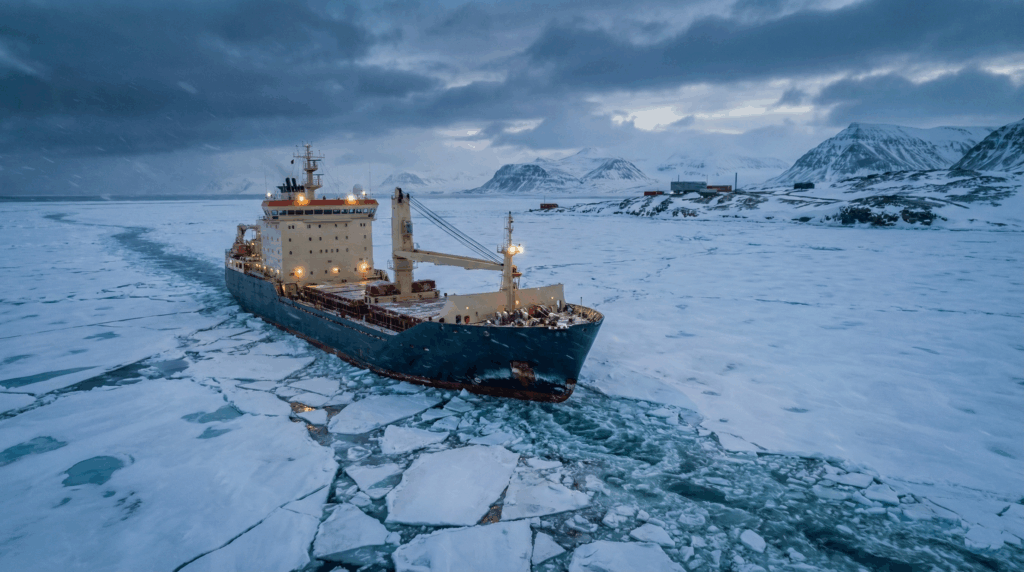
Why Arctic Shipping is Extremely Challenging
The Polar Regions represent some of the most remote and dangerous waters on the planet. Even highly experienced officers struggle without specialized training. The environment is unpredictable, technology alone cannot guarantee safety, and survival opportunities are minimal in emergencies.
Below are the major challenges faced in Arctic shipping, along with how the APW course helps overcome them:
1. Extreme Weather Conditions & Low Visibility
Arctic shipping involves navigating through blizzards, snowstorms, freezing fog, and rapidly changing weather patterns. Visibility can drop to near zero, making route planning and ship maneuvers extremely challenging.
How APW Training Helps
- Training in polar meteorology and weather interpretation
- Using ice navigation radar & satellite data to plan safe routes
- Learning techniques for maneuvering in storms and frozen seas
Through simulator-based learning, the Advanced Polar Water Course trains officers to predict weather behaviour and make informed navigational decisions.
2. Ice Navigation & Structural Stress on Ships
Navigating through heavy, multi-year ice requires specialized skills. Ice can severely damage hulls, propellers, and rudders, leading to catastrophic failures. Even ice-strengthened ships are vulnerable without proper ice navigation techniques.
How APW Training Helps
- Understanding ice chart interpretation and ice classification
- Radar plotting and remote sensing
- Learning ship handling techniques in fast ice, pack ice & drifting ice
- Reducing hull stress through correct navigation angles and speeds
This is why APW is often referred to as the Polar Navigation Course in the maritime industry.
3. Limited Communication & Navigational Support
Unlike normal sea routes, Arctic regions lack marine infrastructure. Limited satellite coverage and poor communication make it difficult to receive weather alerts, emergency support, or technical assistance.
How APW Training Helps
- Practical training on emergency communication protocols
- Risk-based voyage planning using POLARIS & Polar Water Operational Manuals
- Training for independent decision-making in isolation
4. High Risk of Accidents & Difficult Emergency Response
Extreme cold increases the difficulty of search-and-rescue operations. Frostbite, hypothermia, and ice accumulation can quickly become fatal. Evacuation in polar environments requires advanced survival skills.
How APW Training Helps
- Cold weather survival techniques
- Emergency procedures & rescue craft operation in ice conditions
- Abandon ship training & survival equipment use
Additionally, many officers also learn through the Polar Medicine Course, which focuses on handling medical emergencies in regions where hospital access may take days.
5. Environmental Protection Compliance under Polar Code
The Polar Code includes strict guidelines to protect sensitive ecosystems. Failure to comply leads to severe penalties and maritime risks.
How APW Training Helps
- Detailed understanding of SOLAS, MARPOL, and environmental regulations
- Preventing oil spills, waste discharge & hull contamination
- Sustainable operational planning and risk analysis
The APW is often combined with Polar Code Course modules and Advanced Polar Code Training to ensure full compliance.
6. Human Factors: Fatigue, Isolation & Psychological Stress
Long-duration voyages without sunlight, extreme cold, and isolation from rescue zones cause exhaustion, stress, and reduced alertness.
How APW Training Helps
- Leadership & teamwork training for crisis management
- Safety culture development & fatigue control systems
- Real-world case studies and scenario simulations
Role of APW in Career Development
Completing the Advanced Polar Course offers excellent global career opportunities in:
- Polar expedition cruise vessels
- Icebreakers & research ships
- Offshore supply vessels in Arctic fields
- LNG tankers and military supply fleets
Employers prefer candidates who already possess APW certification, as the transition to polar water operations becomes smooth and safe.
Where to Take the APW Course?
Seafarers in India can enroll in APW at maritime training centers approved by DG Shipping & IMO. Training quality, simulator technology, and faculty expertise with real polar experience are crucial when choosing the best APW course institute in India.
For those based in Tamil Nadu or South India, pursuing a Polar Water Course in HIMT, Chennai is convenient and cost-effective. Many seafarers search for the best institute for APW course in India to gain access to real polar navigation simulators, updated Polar Code curriculum, and placement support.
Difference between Basic & Advanced Polar Training
| Feature | Basic Training for Ships Operating in Polar Waters | Advanced Training for Ships Operating in Polar Waters (APW) |
| Purpose | Awareness & introduction | Full operational command & emergency handling |
| Focus | Theory & instructions | Ice navigation, emergency response & voyage planning |
| Who Should Take It? | Deck cadets & junior officers | Masters, Chief Officers & Navigational Command Staff |
BPW must often be completed before APW, but APW is mandatory for command roles.
Conclusion
The Advanced Training for Ships Operating in Polar Waters (APW) at HIMT equips seafarers with the essential skills to face extreme challenges like hazardous weather, ice navigation, emergency survival, and complex environmental regulations. As the maritime industry expands into polar shipping routes, demand for skilled officers trained through the Advanced Polar Water Course remains high.
Whether you are looking to work on polar expeditions or strengthen your professional qualifications, pursuing Advanced Polar Code Training from HIMT, the best APW course institute in Chennai, India, can significantly boost your global maritime career.
Investing in APW today prepares you for tomorrow’s high-value maritime opportunities where only the best-trained officers succeed.
FAQs
1. What are the main challenges faced in Arctic shipping?
Arctic shipping is extremely challenging due to severe weather, sea ice, low visibility, limited communication, difficult emergency response, and strict Polar Code compliance. Specialized training like the APW course is essential for safe navigation.
2. Why do seafarers need the Advanced Polar Water (APW) Course?
Seafarers need APW training to navigate sea ice safely, plan polar voyages, manage emergencies, handle extreme cold, and comply with IMO Polar Code regulations. The course provides practical skills that basic training alone cannot offer.
3. What is the difference between Basic and Advanced Polar Waters Training?
Basic training provides awareness of polar risks and regulations, while the Advanced Polar Water Course focuses on operational command, ice navigation, emergency management, and voyage planning. Officers taking command roles are required to complete APW.
4. Does APW training improve job opportunities for seafarers?
Yes. APW certification opens high-value career opportunities on polar expedition vessels, research ships, icebreakers, offshore support vessels, and LNG fleets operating in Arctic regions. Completing the APW course at HIMT strengthens global employability.
5. Where can I take the Advanced Polar Water (APW) Course in India?
Seafarers can pursue APW at IMO and DG-approved institutes. HIMT is one of the best training centers in India, offering advanced simulators, experienced faculty with real polar exposure, and updated Polar Code curriculum for comprehensive training.